

About Us
The Galápagos Community Library is an educational and community initiative managed by the Galápagos National Park Naturalist Guides Association (AGIPA), an organisation founded in 1991.
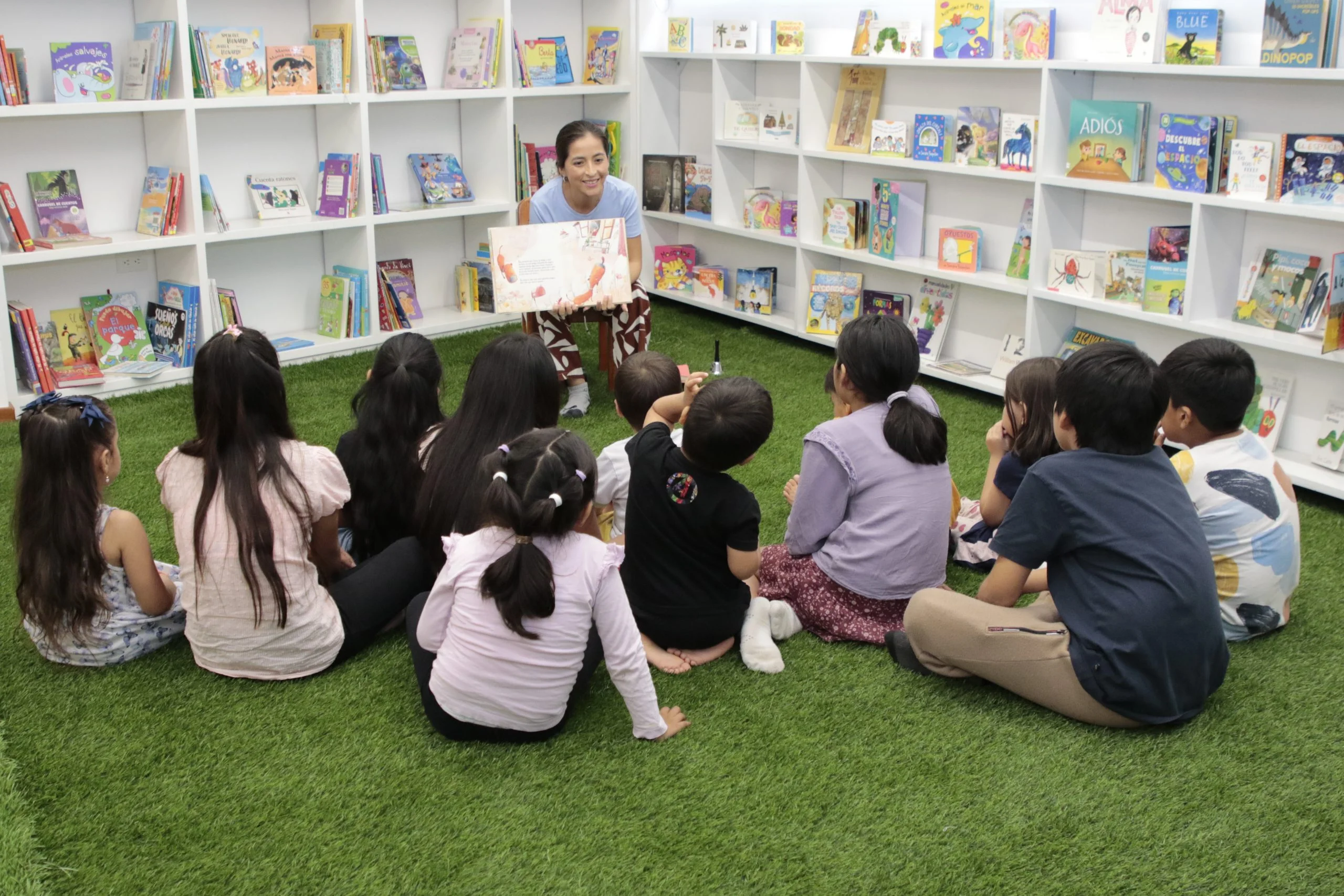
We are a welcoming space for reading, learning, creativity and connection, where children, young people and adults can discover opportunities to learn, share and develop their potential.
In an archipelago renowned worldwide for its extraordinary biodiversity, we firmly believe that conservation begins with educating people, especially the children who call these islands home.
We work to bring education, science, technology, art and culture closer to our community, encouraging curiosity, critical thinking and a sense of responsibility for the future of Galápagos.
Our History
The Library was established in 2005 through an initiative led by AGIPA with the support of the Embassy of Japan, with the aim of providing the Santa Cruz community with a space dedicated to reading and learning.
Its operation is supported by a long-term agreement with the Municipality of Santa Cruz.
In 2018, AGIPA resumed responsibility for managing the Library, and in 2019, it reopened its doors, marking the beginning of a new chapter of growth and development.
Since then, we have worked to rebuild and expand our book collection, introduce technology and transform the Library into a vibrant community learning centre.
Today, our collection includes approximately 2,000 books, alongside educational, cultural and recreational programmes for people of different ages.
Education for a Sustainable Future
Our programmes align with the United Nations Sustainable Development Goals (SDGs) and the Galápagos contextualised school curriculum.
Through reading, science, art, technology and community participation, we connect learning with the unique environment and realities of our islands, fostering an understanding of biodiversity, ecosystem conservation and sustainable development.
We believe that a community with greater access to educational opportunities is better equipped to participate actively in protecting its natural heritage and shaping its own future.
Thanks to Those Who Make Our Library Possible
The Galápagos Community Library is made possible through the generosity and commitment of our donors, sponsors and strategic partners.
Their support is essential to keeping our doors open, providing free educational programmes and expanding learning opportunities for our community.
Every contribution, collaboration and partnership helps us reach more people and continue building a future with greater opportunities for Galápagos.
Education that transforms. A community that cares.
Reading, science, technology, and community learning to build the future of Galápagos together.
Mission
Transform lives in Galápagos through equitable access to education, reading, science, technology, and community learning, preparing future generations personally committed to conservation and sustainable development.
Vision
To be the leading community education center in the Galápagos archipelago: a replicable model demonstrating that education and conservation can grow together.
Our History
A journey led by AGIPA since 1991.
1991
AGIPA Is Founded
The Association of Naturalist Guides of the Galápagos National Park (AGIPA) was founded as a nonprofit organization that later established and now manages the Library.
2005
The Library Is Founded
The Community Library is built and equipped in Puerto Ayora with the support of the Embassy of Japan in Ecuador and in partnership with the Municipality of Santa Cruz.
2018
A New Chapter
AGIPA resumes full administration of the Library and begins a new stage of recovery, strengthening, and renewal.
2019
Reopening
The Library reopens as a community space for education, reading, culture, technology, and connection.
2025
A Growing Impact
Cumulative impact through 2025: more than 19,500 visits, 10,300 participants, and 815 workshops and activities for the community.
2026
Looking Ahead
Strengthening and expanding educational, scientific, and conservation programs for the new generations of Galápagos.